Dental Reps Reveal The $3,000 Billing Code Trick
Discover how a 30-second review of practice billing codes and coverage rules can prevent thousands of dollars in unexpected dental charges.
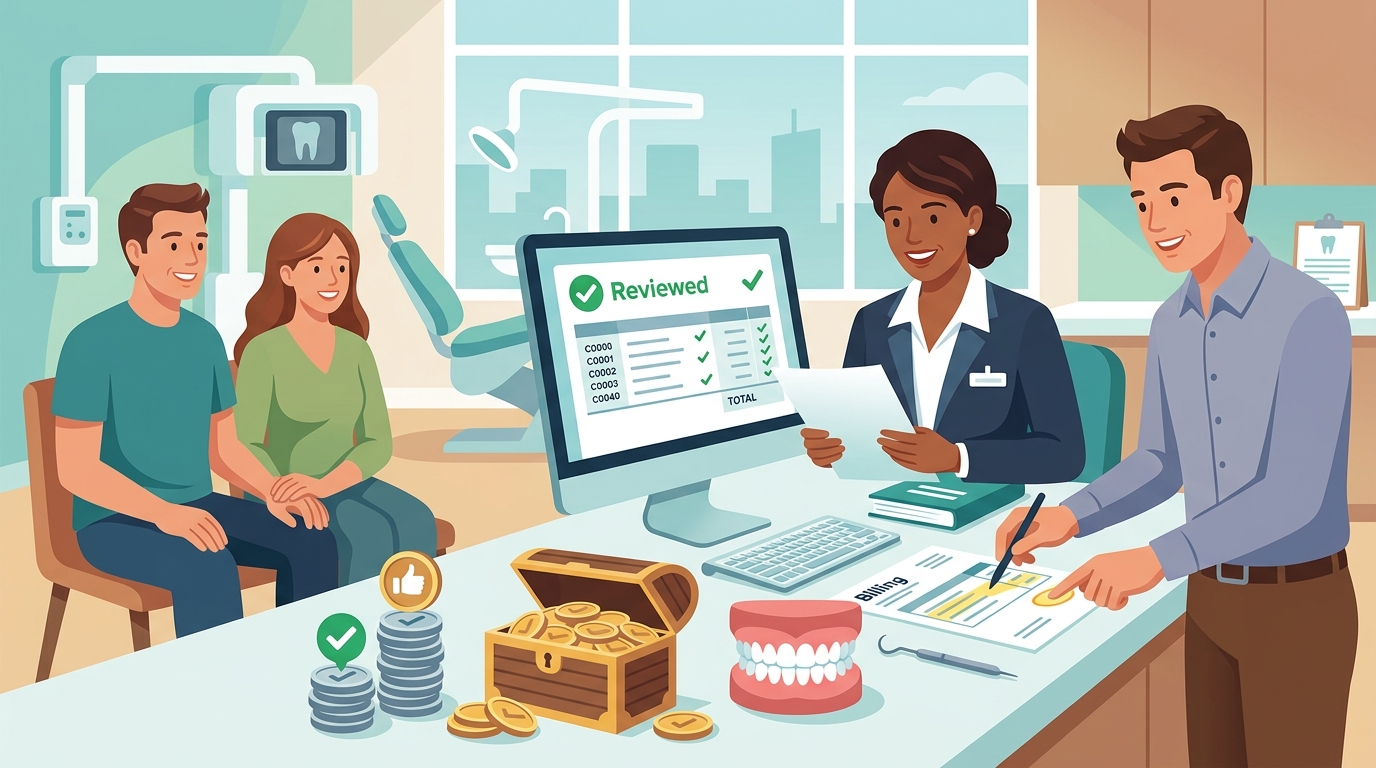
Checking your dental treatment estimate against official procedure codes takes less than a minute and can stop software from overcharging you. Dental practice management software often defaults to the highest fee tier, but cross-referencing your treatment plan can save up to $3,000 on complex procedures.
The 30-Second Audit That Uncovers Hidden Billing Codes
When a dentist presents a multi-thousand-dollar treatment plan, the figures are rarely typed out by hand. Practice management software automatically populates line items, clinical notes, and financial estimates based on preset configurations. Insider sales representatives for these software systems acknowledge that default settings are designed to maximize practice revenue by selecting comprehensive procedure packages rather than individual baseline codes.
By requesting an itemized breakdown containing five-digit procedure codes prior to treatment, patients can perform a quick 30-second audit. Comparing these numeric codes against official industry standards ensures that you pay only for services actually performed rather than bundled administrative defaults.
How Dental Practice Software Auto-Selects Premium Procedure Codes
Dental billing relies on the Code on Dental Procedures and Nomenclature, commonly known as CDT codes, maintained by the American Dental Association (Source 2). Every clinical action—from a basic examination to a complex surgical implant placement—corresponds to a specific CDT code starting with the letter D (Source 2).
Software algorithms frequently suggest complex or multi-surface procedure codes by default when a practitioner enters a general clinical finding. For example, if a patient requires a standard crown restoration, software automation may select a premium ceramic code alongside separate line items for temporary restorations, core buildups, and diagnostic scans. When these components are automatically layered together, the out-of-pocket estimate can balloon by $1,000 to $3,000 above standard localized fee structures.
The $3,000 Difference Between Bundled and Unbundled CDT Codes
Code bundling occurs when several distinct dental steps are combined into a single overarching code, whereas unbundling separates those steps into multiple billable charges. According to ADA coding standards, billing separately for routine procedures that are legally considered part of a primary treatment package is incorrect (Source 2).
Patients often observe significant price jumps when software generates separate fees for items like pre-operative imaging, soft tissue conditioning, or post-surgical checks. Reviewing these codes before signing a consent form allows patients to ask whether specific line items are duplicate charges already covered under the primary CDT service code (Source 2).
- Diagnostic 3D Cone Beam CT Scans automatically billed separately instead of being included in specialized surgical packages.
- Surgical placement codes paired with separate charges for routine operative site preparation.
- Restorative crown codes listed alongside unnecessary duplicate impression fees.
CMS Medicare Coverage Exceptions That Most Patients Miss
A common point of financial confusion involves government healthcare benefits. Under rules established by the Centers for Medicare & Medicaid Services, traditional Medicare Part A and Part B generally exclude routine dental services such as cleanings, fillings, or standard dentures (Source 1).
However, CMS rules do allow Medicare coverage for dental services that are integral to specific covered medical treatments (Source 1). This includes dental exams required before major organ transplants, heart valve replacements, or head and neck cancer therapies (Source 1). Practice management software frequently fails to detect these medical exceptions, automatically marking the bill as a 100% patient cash responsibility unless the billing specialist manually flags the claim for medical primary billing.
| Billing Category | Default Software Coding | Audited Standard Coding | Potential Cost Difference |
|---|---|---|---|
| Complex Crown Restoration | D2740 + D2950 + D9999 | D2740 (Inclusive) | $350 - $800 |
| Surgical Extractions | D7210 + D9223 (Per Unit) | D7210 (Standard Time) | $400 - $1,200 |
| Pre-Transplant Dental Clearance | Cash Pay (Out-of-Pocket) | Medicare Part A/B Covered | $1,500 - $3,000+ |
Three Steps to Review Your Itemized Treatment Plan in 30 Seconds
Spotting software errors requires minimal effort once you know where to look on your printed treatment estimate. Taking these concrete steps ensures you avoid paying for automated software defaults.
- Step 1: Request an official itemized treatment plan displaying full 5-digit CDT procedure codes alongside written descriptions (Source 2).
- Step 2: Check for repeated or overlapping descriptions, such as multiple fees for imaging or consultation on the same date of service.
- Step 3: Ask the office financial coordinator if any procedures are linked to primary medical conditions covered under CMS guidelines (Source 1).
How to Dispute Incorrect Auto-Generated Procedure Charges
If you identify duplicate or inflated CDT codes on your treatment outline, present the written document to the billing manager before treatment begins. Dental practices can easily modify software estimates, re-verify clinical necessity, or apply correct bundling rules in their system.
For patients covered under Medicare or commercial insurance plans, asking the practice to submit a formal pre-treatment estimate directly to the insurer provides written confirmation of allowed costs, preventing unexpected post-procedure invoices.
What is a CDT code in dental billing?
A CDT code is a standardized five-character alphanumeric identifier set by the American Dental Association used to report dental procedures and administrative services (Source 2).
Does Medicare pay for any dental procedures?
Traditional Medicare excludes routine dental care, but CMS regulations cover dental services that are directly linked to the clinical success of covered medical treatments like organ transplants or cancer procedures (Source 1).
Why do dental billing software estimates vary between offices?
Practice software utilizes configurable fee schedules, localized cost presets, and automated code bundles that vary based on office settings and provider preferences.
Sources
- Medicare Dental Services — Centers for Medicare & Medicaid Services
- Code on Dental Procedures and Nomenclature (CDT) — American Dental Association
This article is for general information only and is not professional advice. Figures come from public sources and change over time; check the official source before you act.
More from Real Money Net
- The $12,000 Deposit Mistake You Make With Local Builders
- Cut $5,000 Off Construction Bids With This Quick Tax Verification
- Contractors Keep Hiding This $3,000 Clause In Your Local Bids
- How Your ZIP Code Unlocks $10,000 Construction Savings Today
- The $840 Mistake You Make Before Buying New Insurance
- The Simple IRS Form That Cuts Your Bills by $610