See If Your ZIP Code Qualifies For $39 Auto Insurance Rate
State public programs offer auto liability policies for around $39 per month to drivers meeting local income, vehicle, and driving record requirements.
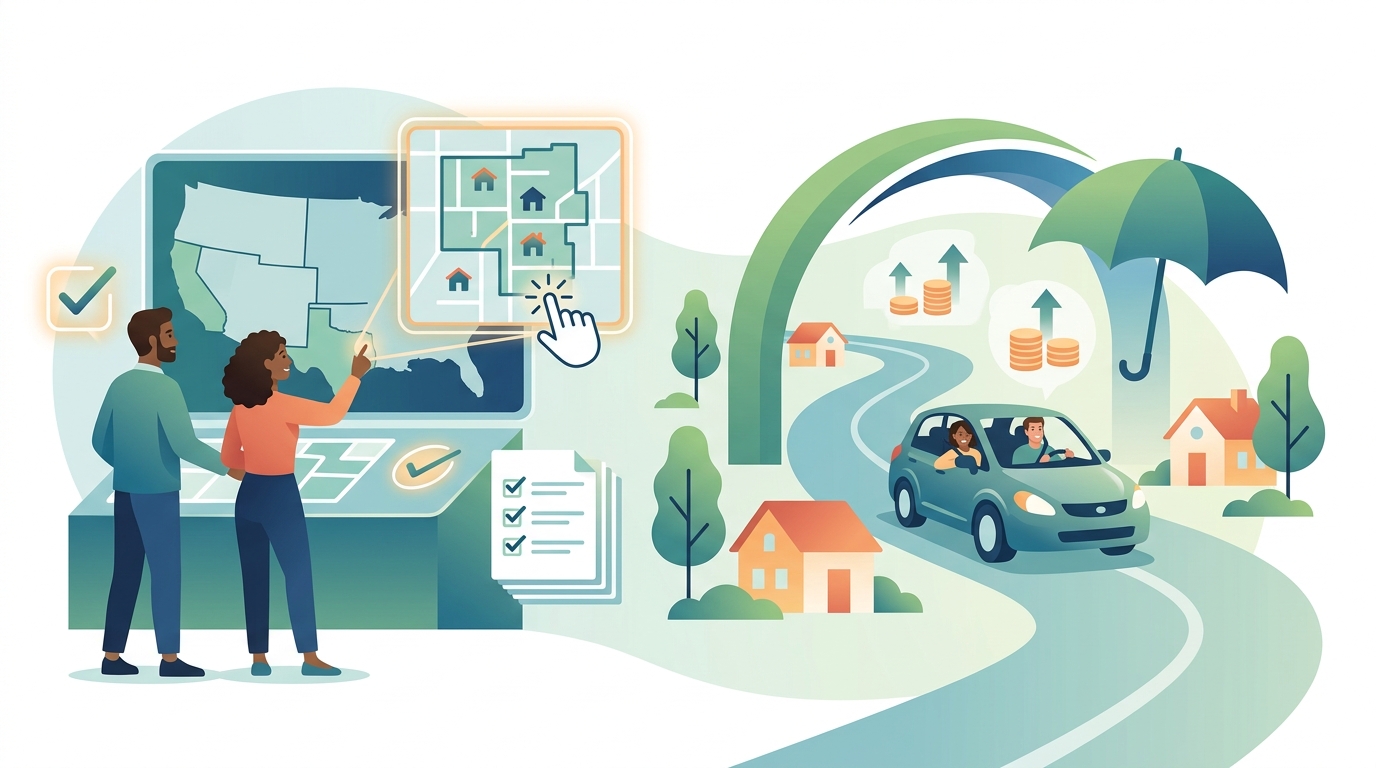
State-backed insurance initiatives allow eligible drivers in selected ZIP codes to secure basic auto liability coverage for approximately $39 per month (Source 2). Qualifying depends directly on your location, household income, driving history, and vehicle value (Source 2).
The $39 Auto Insurance Exception Defined by State Law
State governments establish minimum financial responsibility standards for all drivers operating motor vehicles on public roads (Source 3). To help low-income residents meet these legal requirements, several states mandate specialized public auto insurance options (Source 2). Programs like the California Low Cost Automobile Insurance Program offer basic liability coverage designed to keep drivers legal without heavy financial burden (Source 2).
Under these official state frameworks, annual premiums are standardized across designated regions, often translating to monthly payments between $20 and $40 depending on your county (Source 2). A rate of $39 per month reflects typical pricing for basic liability coverage in many urban and suburban ZIP codes (Source 2). These policies strictly satisfy state motor vehicle registration requirements while keeping baseline expenses predictable (Source 3).
How Your Specific ZIP Code Controls Base Rates
Insurance rates vary significantly by ZIP code due to local risk factors evaluated by state insurance departments (Source 2). Regulators group geographic areas into distinct pricing tiers based on population density, local traffic accident statistics, and regional litigation costs (Source 2). Drivers living in areas with lower claims frequencies generally qualify for lower statutory base rates (Source 2).
When you enter your ZIP code into a state qualification tool, the system checks whether your county participates in state-subsidized or regulated low-cost initiatives (Source 2). If your geographic zone falls within a designated low-cost tier, your base premium is capped by state administrative guidelines (Source 2). Next, eligibility systems review your individual household financial profile to confirm final qualification.
Income Tiers and Vehicle Value Rules You Must Meet
Qualifying for low-cost auto coverage requires meeting precise financial thresholds established by state regulations (Source 2). Programs generally require household income to fall at or below 250% of the federal poverty guidelines (Source 2). Applicants must present official tax returns, pay stubs, or government benefit documentation to verify their financial eligibility (Source 2).
Vehicle valuation rules also apply to prevent misuse of public programs. For example, state programs often require that the driver's vehicle be valued at or below $25,000 (Source 2). Vehicles exceeding this value threshold are disqualified regardless of the applicant's household income status (Source 2). Next, applicants must verify how their vehicle is financed.
The Minimum Coverage Catch That Lenders Reject
While $39 monthly policies fulfill state legal mandates for driving, they provide liability-only coverage (Source 2). Liability insurance pays for injuries and property damage you cause to other people in an accident, but it provides zero financial protection for damage to your own car (Source 1).
If your vehicle is financed or leased, your lender usually requires full coverage, which includes comprehensive and collision protections (Source 1). The Consumer Financial Protection Bureau notes that lenders retain the legal right to purchase force-placed insurance at your expense if you drop full coverage on an active auto loan (Source 1). Force-placed insurance is typically far more expensive than standard commercial policies (Source 1). Therefore, state low-cost liability programs are primarily suited for drivers who own their vehicles outright without an outstanding loan balance (Source 1, Source 2).
Clean Driving Record Rules for Government Rates
State-sponsored low-cost auto plans maintain strict driving history requirements to keep program costs stable (Source 2). Applicants must hold a valid driver's license issued by state licensing authorities (Source 3). Most state programs require at least three years of continuous driving history (Source 2).
- No more than one moving violation point on your driving record within the past three years (Source 2).
- No felony or misdemeanor convictions involving motor vehicle operation on your record (Source 2).
- No history of at-fault accidents involving bodily injury or severe property damage during the evaluation period (Source 2).
- All drivers listed on the vehicle policy must meet the state's eligibility criteria (Source 2).
If a driver in your household fails to meet these driving record standards, the application for statutory rates may be denied or assigned a higher surcharge (Source 2). Next, learn how to complete the official submission process.
Step-by-Step Method to Claim State Low-Cost Rates
Enrolling in a state low-cost insurance plan involves formal verification through state-authorized agencies rather than standard commercial comparison sites (Source 2). Following official steps prevents delays and ensures accurate rate quotes (Source 3).
- Check State Availability: Visit your state department of insurance website or USA.gov to confirm if your state operates a public low-cost program (Source 2, Source 3).
- Gather Documents: Collect tax records, wage stubs, current vehicle registration, and driver's license details for all household members (Source 2).
- Verify Vehicle Value: Check your vehicle's current market value against state thresholds (e.g., maximum $25,000 value) (Source 2).
- Submit Application: Complete the official application through a licensed certified producer or designated state portal (Source 2).
State Low-Cost Program Comparison Breakdown
| Program Element | Standard Requirement | Primary Source |
|---|---|---|
| Monthly Cost Tier | Averages $30 to $40 per month ($39 typical) | Source 2 |
| Income Limit | At or below 250% of Federal Poverty Guidelines | Source 2 |
| Vehicle Value Limit | Vehicle value must not exceed $25,000 | Source 2 |
| Coverage Type | State minimum liability protection only | Source 1, Source 2 |
| Financing Eligibility | Owned vehicles (Lenders require full coverage) | Source 1 |
| Licensing Standard | Valid driver license; max 1 point on record | Source 2, Source 3 |
Does a $39 auto insurance policy cover damage to my own vehicle?
No. State low-cost policies offer basic liability coverage required by law, which pays for damage or injuries you cause to others. It does not cover repair costs for your own vehicle (Source 1, Source 2).
Can I get state low-cost auto insurance if my car is financed?
While legally allowed by state driving rules, lenders usually require comprehensive and collision coverage on active loans. Using liability-only coverage may cause your lender to add expensive force-placed insurance to your loan balance (Source 1).
How do I check if my ZIP code is eligible for state low-cost insurance?
You can check eligibility by visiting your state's Department of Insurance website or checking motor vehicle resource listings on USA.gov (Source 2, Source 3).
Sources
- Auto Insurance and Vehicle Financing — Consumer Financial Protection Bureau
- California Low Cost Automobile Insurance Program — California Department of Insurance
- Motor Vehicle Services and Driver Licensing — USA.gov
This article is for general information only and is not professional advice. Figures come from public sources and change over time; check the official source before you act.
More from Real Money Net
- The $12,000 Deposit Mistake You Make With Local Builders
- Cut $5,000 Off Construction Bids With This Quick Tax Verification
- Contractors Keep Hiding This $3,000 Clause In Your Local Bids
- How Your ZIP Code Unlocks $10,000 Construction Savings Today
- The $840 Mistake You Make Before Buying New Insurance
- The Simple IRS Form That Cuts Your Bills by $610